
Víaby Hapee
An AI travel assistant that guides Metro riders in real time, with a special focus on disruptions.
- One brain for the whole network
- App, WhatsApp and QR
- Real time
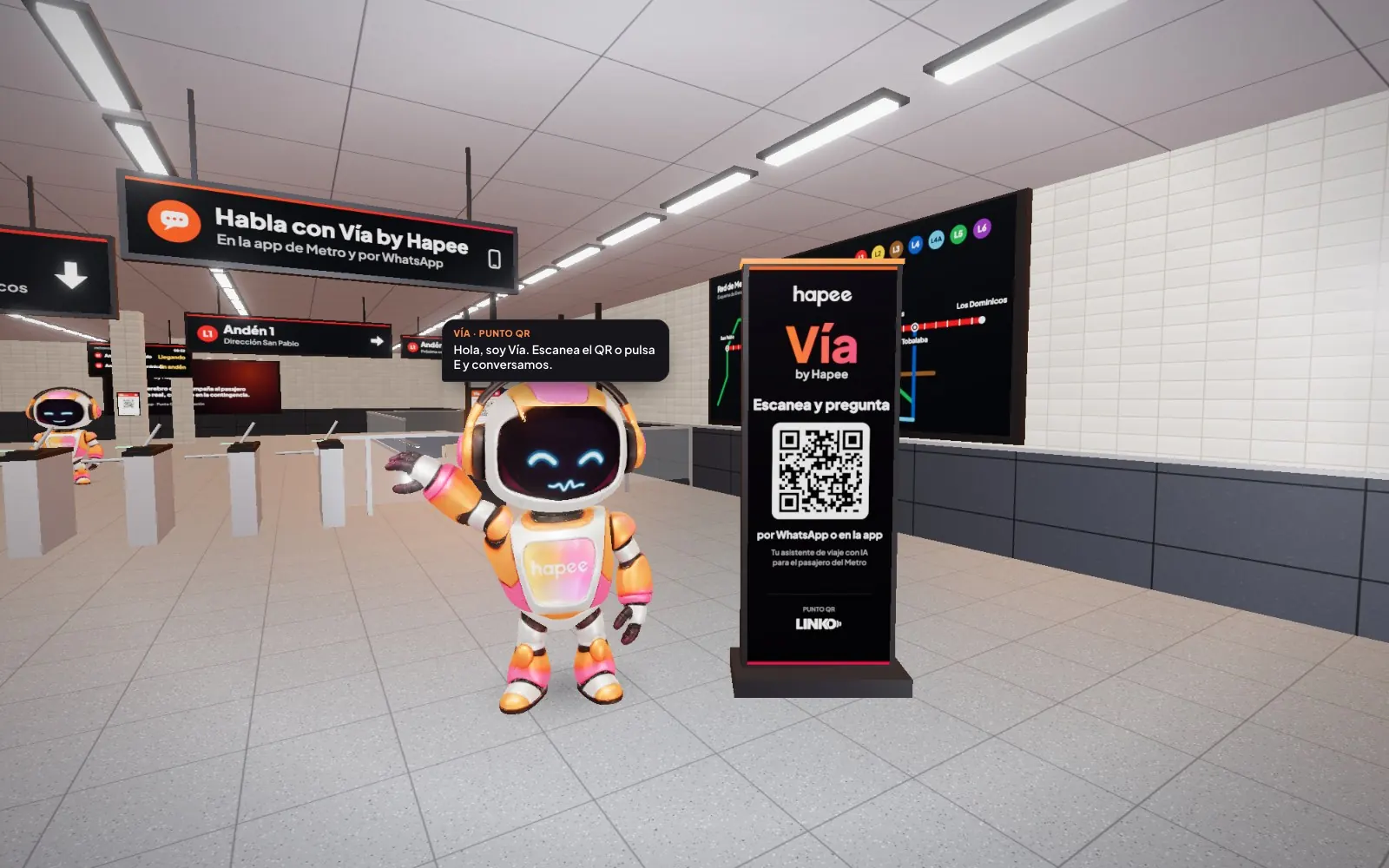
Inside you can walk around, talk to the Vía robots, scan a QR code, board the train and chat with Vía during the ride.
The problem
A stopped train.A detour.A service change.
Right when support channels get overwhelmed and uncertainty spikes, Vía answers in the channel where riders already are.
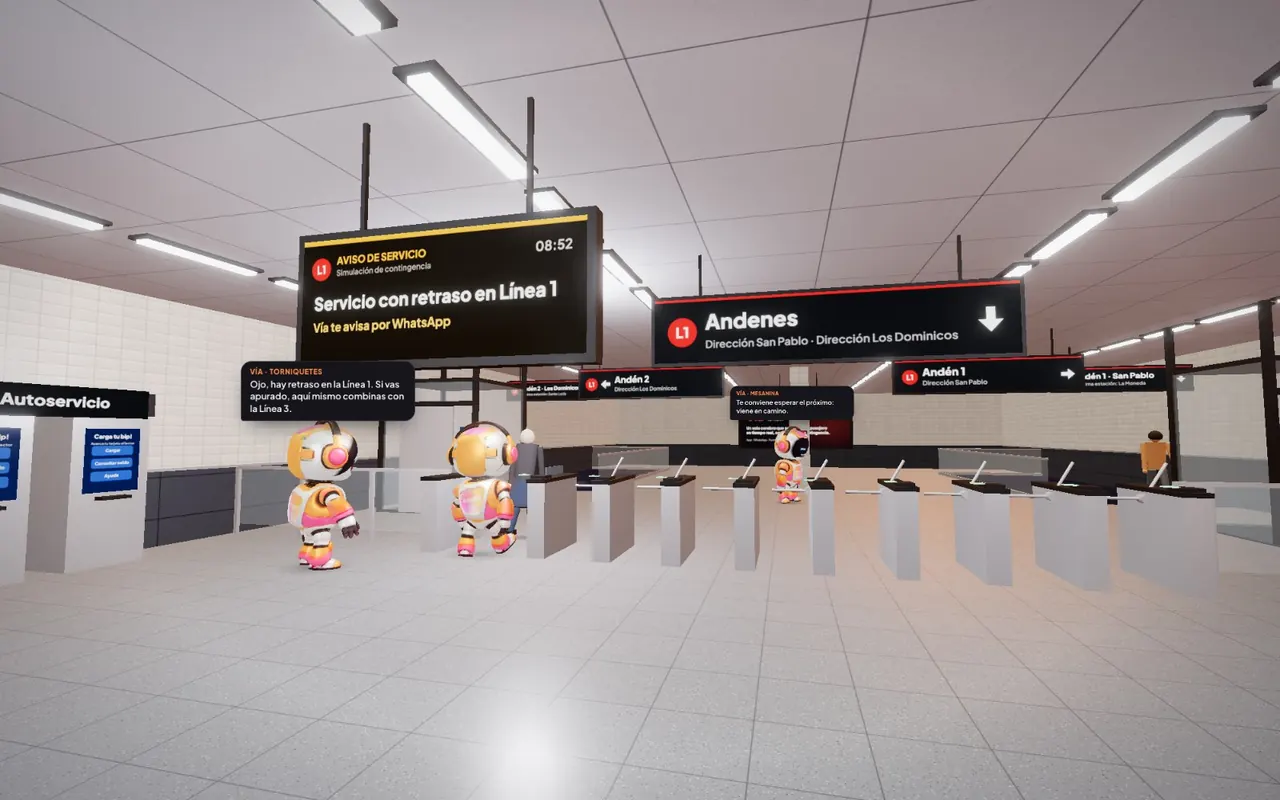
How Vía works
One assistant for the whole network, on every channel
-
01
One brain
It is not one agent per station: it is a single engine that serves the entire network and scales to future lines without re-architecture.
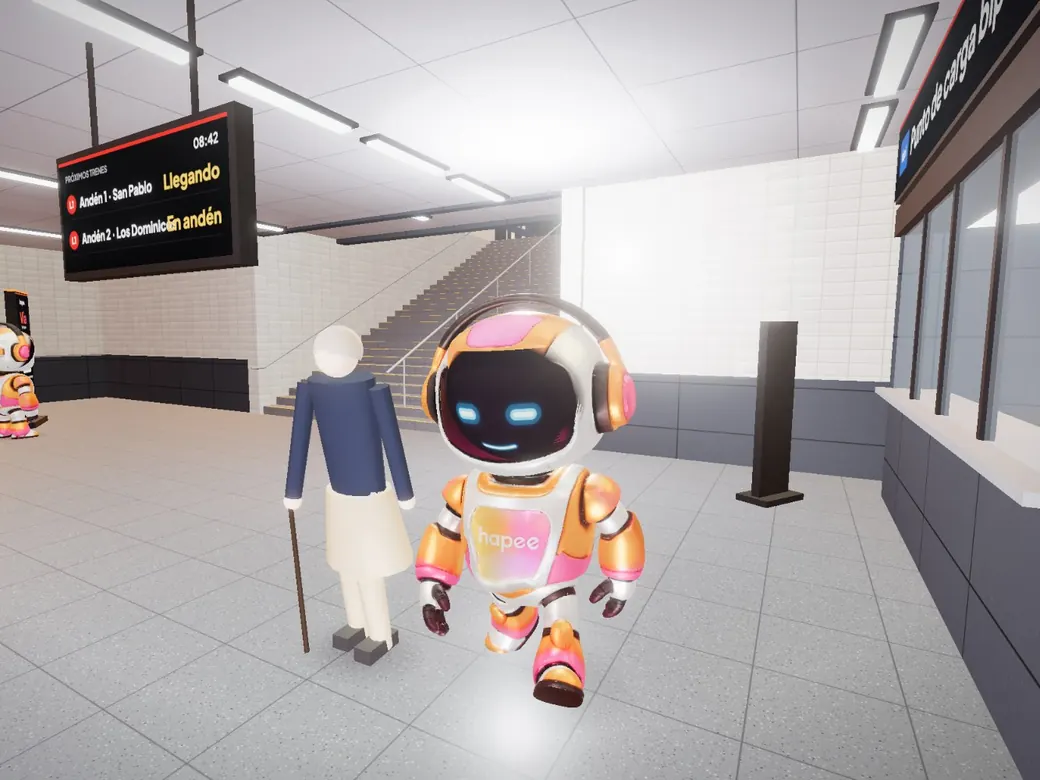
The Vía companion robot walks an older rider to the platform, at their own pace. -
02
Omnichannel
It lives where riders already are —the app and WhatsApp— plus a lightweight physical QR point in the station. No changes to existing infrastructure.
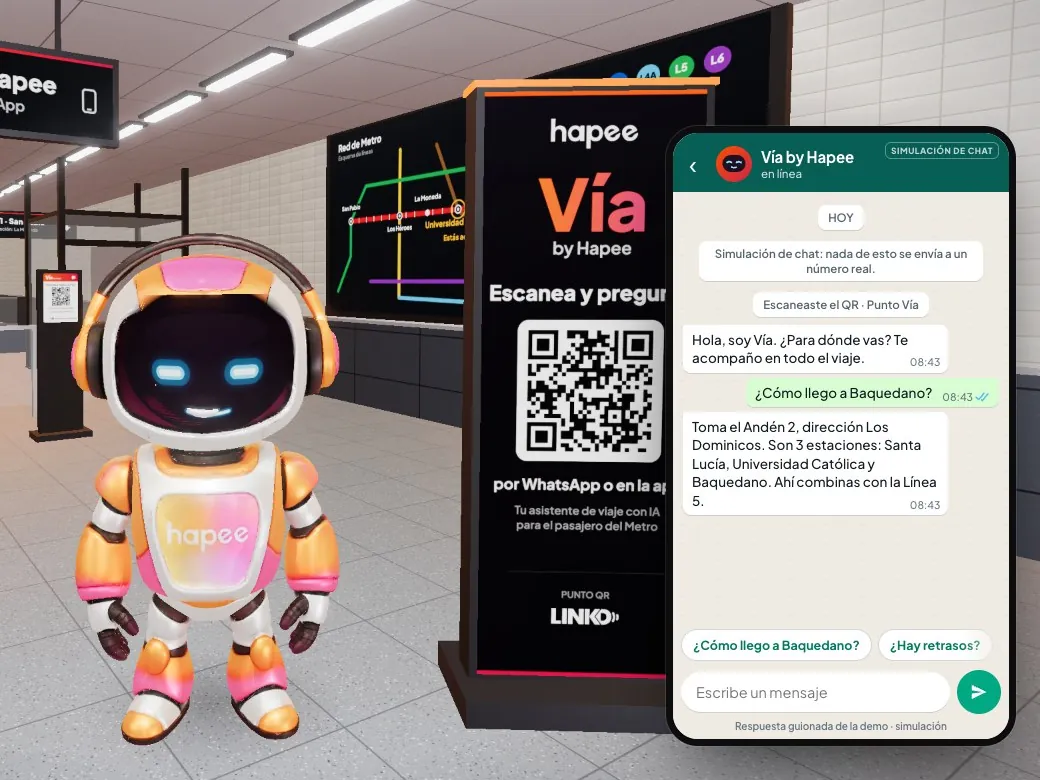
The Vía Point on the mezzanine: you scan the QR and the conversation continues in the chat. -
03
Real time
It integrates via API with the service status feeds the operation already has. Information arrives on time and personalized, not as a generic announcement over the PA.
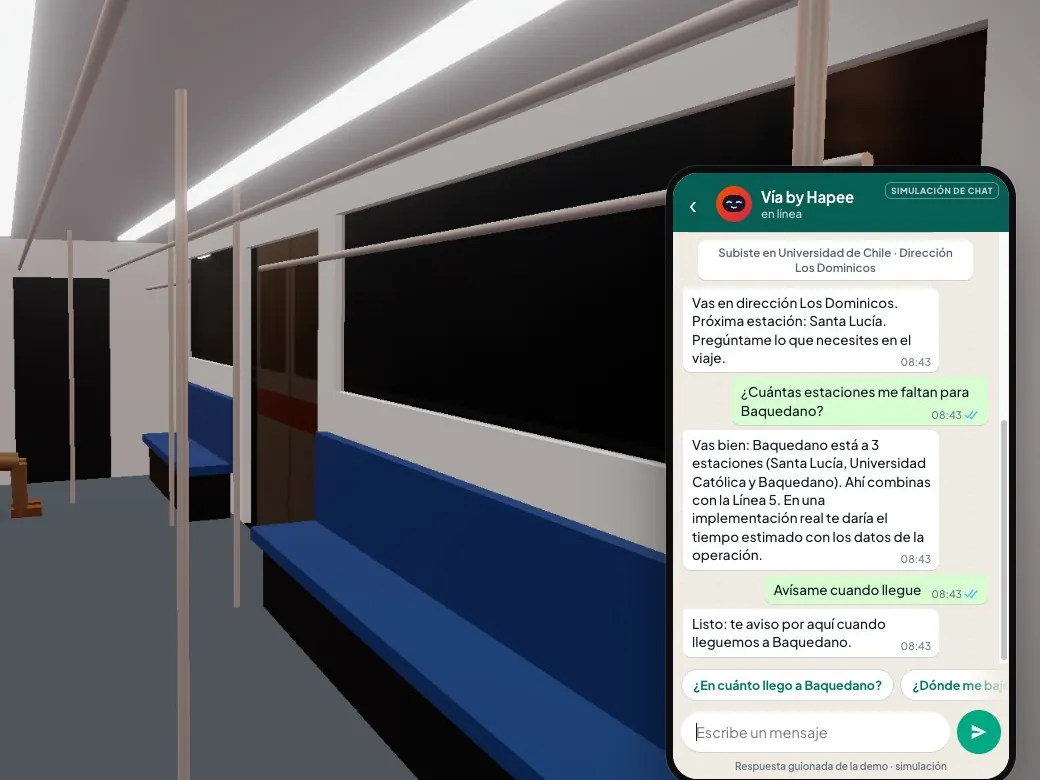
On the train, the same chat tells you how many stops are left.
No changes to existing infrastructure.
Vía builds on what already works: the channels riders use every day and the status feeds the operation already has.
- App
- QR Point in station
- API with status feeds
A trip with Vía
From the mezzanine to the platform, with Vía by your side
This is the route you can take today in the 3D station: you go from Universidad de Chile to Baquedano on Line 1.
-
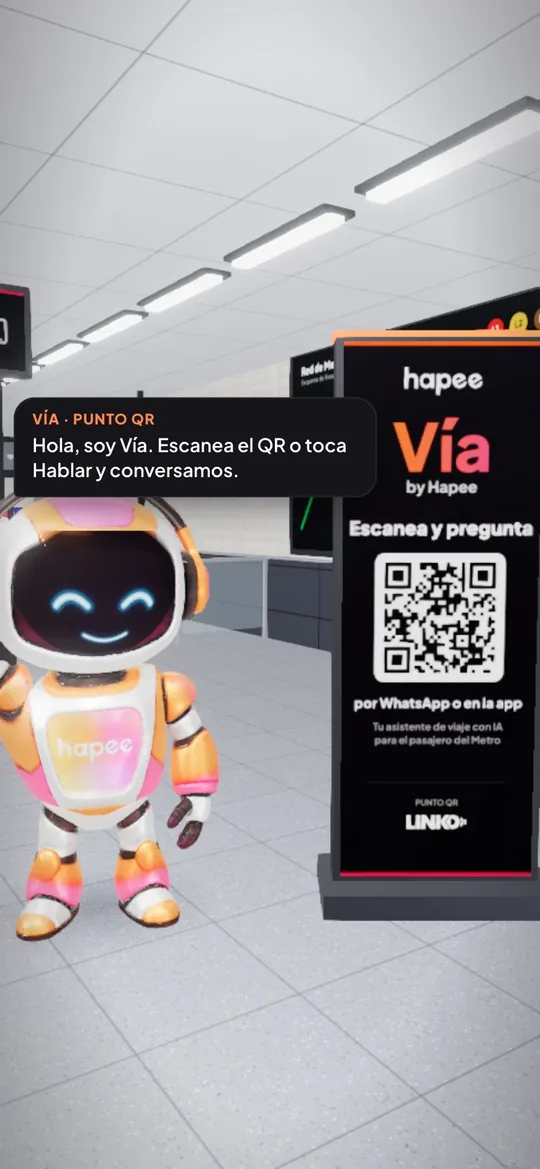
You scan the QR
At the Vía Point on the mezzanine, the robot invites you to scan the code and chat.
-
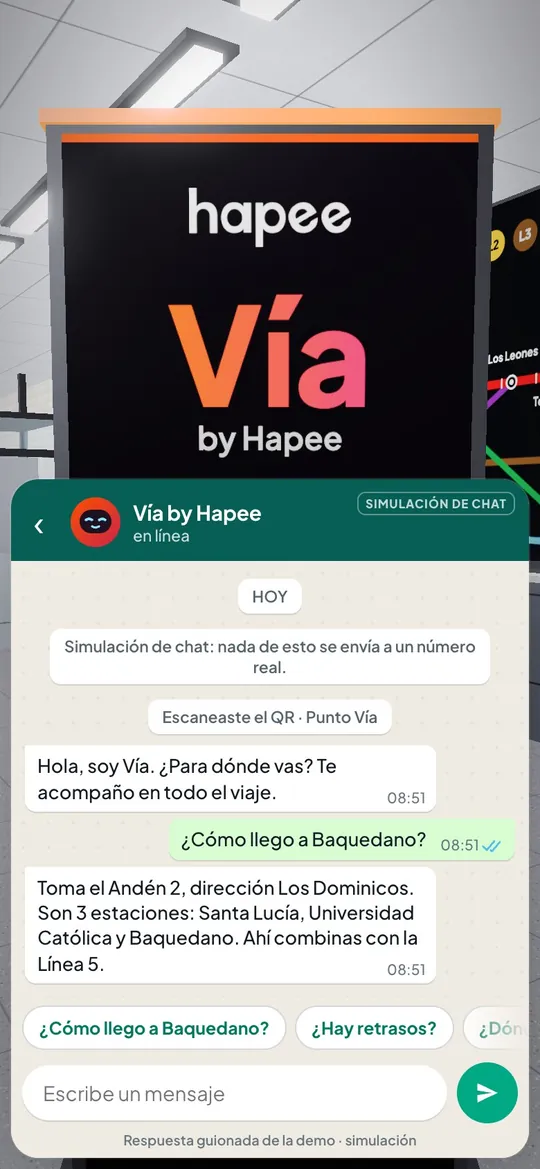
It tells you where to go
How do I get to Baquedano?
Platform 2, toward Los Dominicos: it's 3 stops. -
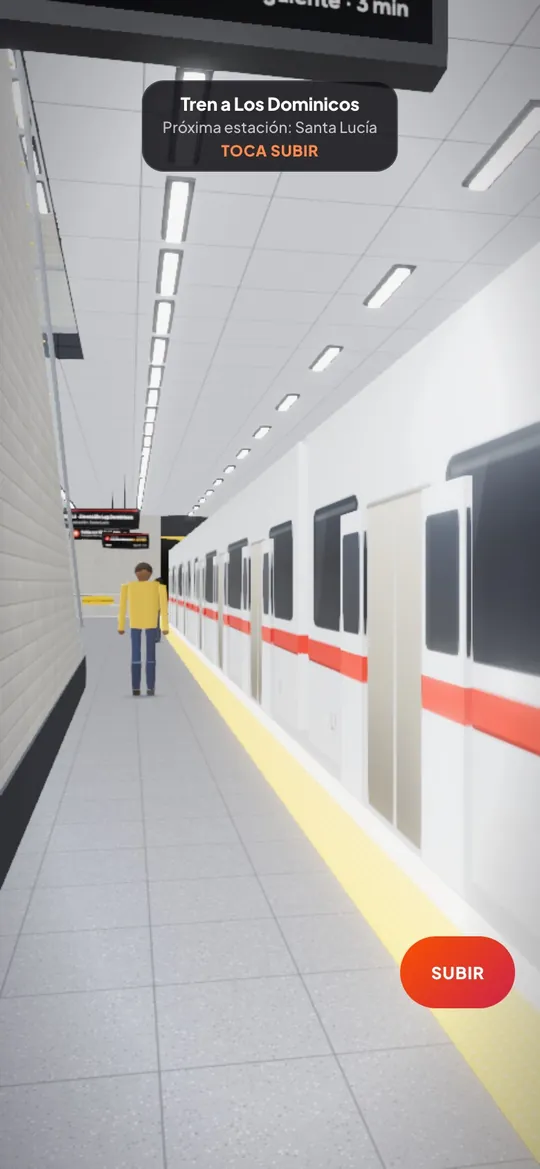
You board the train
On the platform, Vía confirms the train's direction and the next station before you board.
-
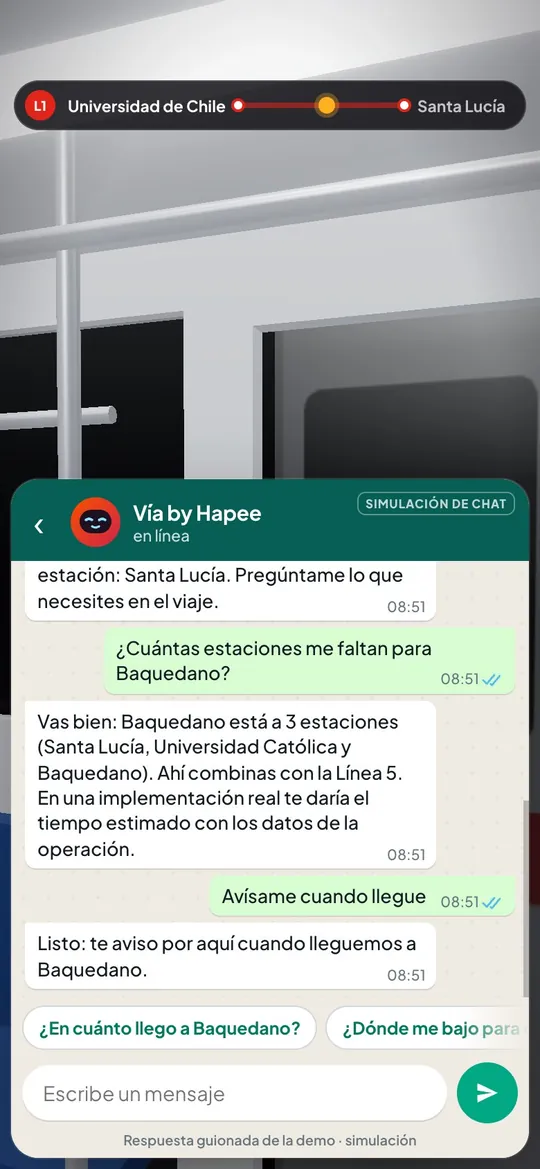
You ask how many stops are left
The same chat stays with you on the train:
You're on track: Baquedano is 3 stops away.
-
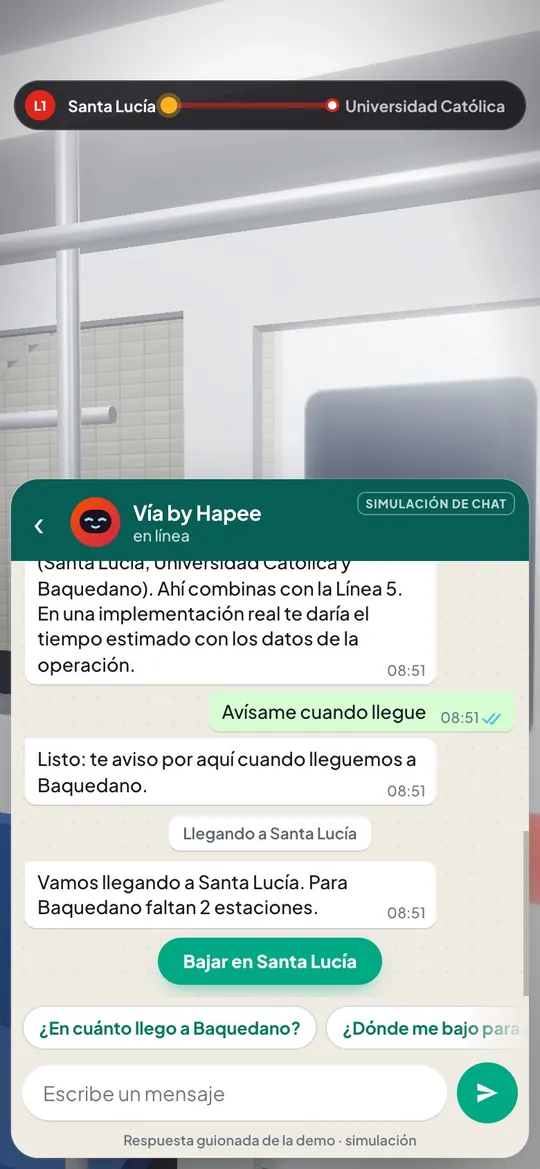
It alerts you before you arrive
We're arriving at Santa Lucía. Baquedano is 2 stops away.
Simulation: in the 3D station, Vía is not connected to the real Metro operation. Responses are for demonstration and the WhatsApp-style chat does not send messages to any number.
About Hapee
Vía runs on Hapee
Vía is not a lab experiment or an idea on a slide: it runs on a platform that is already in production with real customers. The pilot's challenge is not inventing the technology, it is adapting it to the operator.
- Proprietary platform
- Cloud-native on AWS
- Multi-engine: GPT, Gemini and Claude
- Native MCP with Anthropic's Claude
- +2KAutomated customersThe Hapee platform runs today with real customers, in production.
- ~2.4 sAgent response timeSpeed that matters when thousands of riders ask at once.
- 24/7In every disruptionAutomatic scaling on AWS: it grows at peak and returns to baseline.
The proposal starts with a limited pilot at high-traffic stations: low risk, fast learning.
What's next
We're already inside, building with Metro
-
2026
Metro de Santiago Demo Day
We presented Vía to the open innovation process that this year was called under the theme “Transforming the network that moves the city.”
-
August 2026
We advanced to the next phase
The proposal was reviewed and selected to stay in the race: mentorships and AI development plans alongside the Metro team.
We are here -
Coming up
The competition
Soon we will be competing to become the official AI of the Santiago Metro.
-
End of year
The big winner
The big winner will be announced at the end of the year. December will tell who takes the title.
While that final approaches, the relationship is already in motion: we are exploring side projects with Metro.
Read the Demo Day storyLet's talk
Vía runs on Hapee. Your business can too.
The same platform we applied to Metro with already serves real customers every day. Get to know it, no commitment.